Last reviewed October 15, 2026 by Daryl Williams, Bentley Forbes Security Training Academy.
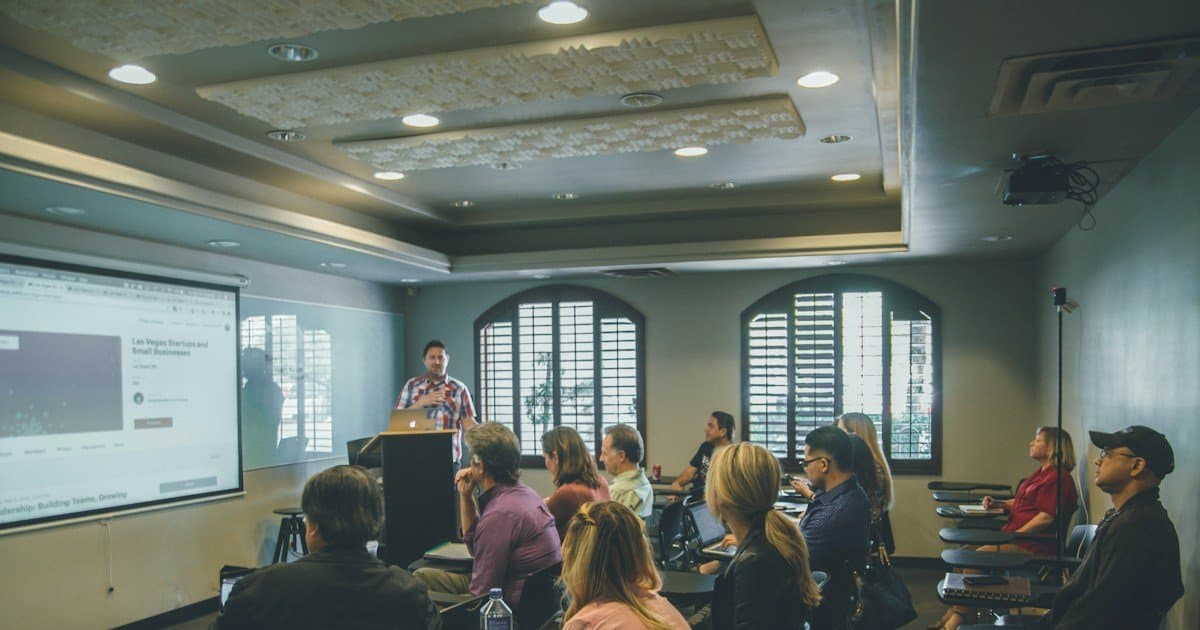
Search "guard card online California" and you'll find ads promising a fast, fully online path to your security license. Here's the short answer: the 8-hour Power to Arrest and Use of Force course you need before you apply can't be done 100% online. BSIS's regulation requires five use-of-force topics to be taught in person, and state law defines classroom instruction as an instructor physically present for at least half the course.
That doesn't mean every online option is a scam. Some parts of guard card training can happen online, and some rules simply aren't spelled out. This guide compares online-only, hybrid, and in-person training, shows you the red flags to watch for, and walks you through checking a school's license before you pay. For the full licensing process, see our complete California guard card guide.
Key Takeaways
- A 100% online, no-classroom version of the 8-hour Power to Arrest/Use of Force course does not meet California's requirement.
- Five use-of-force topics must be taught in person, and state law defines classroom instruction as an instructor physically present for at least 50% of the course.
- Since January 1, 2026, a single course provider must administer and certify all 8 hours, within 6 months before you apply (SB 652).
- Today's rules don't clearly say whether the later 32 hours or the annual 8 hours can be online, so confirm with your provider and BSIS. Starting January 1, 2029, SB 1203 requires the post-registration hours to be taught through traditional classroom instruction.
- Check any school on DCA License Search before you pay.
Can You Get a California Guard Card Completely Online?
No. The 8-hour course you must finish before registration can't be fully online. That course is 3 hours of Power to Arrest and 5 hours of Appropriate Use of Force, and you must score 100% on the exam.
In BSIS's regulation (16 CCR § 643, Appendix), five use-of-force topics are designated in-person:
- The use of objectively reasonable force
- Use of force review and analysis
- De-escalation and interpersonal communication
- Use of force scenario training
- Active shooter situations
State law adds a second rule. Under BPC 7583.7, "traditional classroom instruction" means the instructor is "physically present with students in a classroom for a minimum of 50 percent of the course and is available at all times."
BSIS has already considered the all-online idea. In its 2023 Final Statement of Reasons, the Bureau said providers may teach "some of the courses online," but it rejected public comments asking to allow the whole course online. The Bureau can also inspect exam administration at any time without prior notice (BPC 7583.7(e)).
Bottom line: a course sold as "100% online, no classroom" for the 8-hour Power to Arrest/Use of Force training does not meet the requirement.
What Parts of Guard Card Training Can Be Online?
Some of it may be, but the rules are only clear for the first 8 hours. Here's how the 40 hours of initial training break down, plus the yearly refresher:
- Before registration: the 8-hour Power to Arrest/Use of Force course. Partly online is possible, but not all of it.
- After registration: 32 hours within 6 months, with 16 of those hours due within your first 30 days.
- Every year after that: 8 hours of continuing training, including at least 2 hours reviewing use of force.
For the 32 hours and the annual 8, neither BPC 7583.6 nor the BSIS syllabus currently says clearly whether online delivery is allowed. We won't guess either way. Ask your provider how they deliver those courses, and confirm with BSIS if you're unsure. That changes on January 1, 2029: under SB 1203, the post-registration hours must be taught through traditional classroom instruction, and at least 4 of the 12 annual hours must be in-person de-escalation role-play (more below). For how the 40 hours fit on a calendar, see our 40-hour guard card training timeline.
Online-Only vs Hybrid vs In-Person: Side-by-Side Comparison
Hybrid and in-person training both meet the 8-hour rule when they're set up correctly. Online-only does not. This table compares the three formats for the pre-registration course.
| Factor | Online-only | Hybrid | In-person |
|---|---|---|---|
| Meets the 8-hour in-person rule | No | Yes, if the 5 in-person topics are in class and the instructor is present 50%+ | Yes |
| Hands-on use-of-force practice | None | Yes, for the in-person topics | Yes, for the full course |
| Single-provider certificate under SB 652 | Not usable, since the course itself falls short | Yes, if a single course provider administers and certifies all 8 hours | Yes |
| Instructor access | Varies; often limited | Instructor must be "available at all times" | Face to face the whole course |
| Scheduling flexibility | Highest | Moderate | Lowest; fixed class times |
The SB 652 row matters more than most people realize. Since January 1, 2026, the 8-hour training must be administered and certified by a single course provider (BPC 7583.6(a)), and you have to finish it within 6 months before you apply. BSIS's alert puts it as "instructed in its entirety and certified by one instructor." You can't pair a 3-hour certificate from one school with a 5-hour certificate from another. Our SB 652 single-provider rule explained covers the details.
Verdict: hybrid wins on flexibility among legal options, and in-person wins on hands-on practice. Online-only isn't a real option for the 8-hour course.
Red Flags When Shopping for Online Guard Card Training
These are our own shopping tips, based on the rules above. BSIS hasn't published a warning about specific online providers, so treat this list as practical guidance, not an official alert.
"Instant guard card" promises
No school can hand you a guard card. BSIS issues your registration after a DOJ and FBI background check through Live Scan. BSIS targets 60 days for initial applications; check current processing dates. A school can train you and issue a training certificate. That's it.
No classroom for use of force
If a course sells the full 8 hours with zero in-person time, it can't cover the five in-person topics the way BSIS's regulation requires. Ask directly: "Where and when do I attend the in-person portion?"
No verifiable BSIS approval or license
The course must come from a BSIS-approved school or organization, a BSIS-licensed firearms training facility, or a security company training its own applicants and employees (BPC 7583.6; 16 CCR § 643). If a provider won't give you its legal business name or its BSIS approval or license number, walk away.
Certificates for only part of the 8 hours
A school that offers just the 3-hour Power to Arrest piece, or just the use-of-force piece, leaves you short under SB 652. You need one certificate for all 8 hours from a single course provider.
How to Verify a Training School on DCA License Search
Checking a school takes about as long as reading its ad. Use the state's free lookup before you pay anything.
- Go to DCA License Search.
- Under board or bureau, choose Bureau of Security and Investigative Services.
- Search by the school's business name.
- Open the result and check that the license status is current. If the school doesn't appear, ask for its BSIS approval or license number and confirm it with BSIS.
- Compare the name and address with the place where you'll actually attend class.
- Save a screenshot of the result for your records.
For more on how BSIS licenses schools, see its training facility information page. Requirements can change, so confirm current rules with BSIS. This article is general information, not legal advice.
When In-Person Training Is Worth It
In-person training is worth it whenever the skill involves your body, your voice, and another person. That describes most of use-of-force training.
De-escalation, scenario training, and active shooter response are on BSIS's in-person list for a reason. You can read about keeping a calm voice and a safe stance, but practicing it with an instructor watching is different. Scenario work also lets you make mistakes in class instead of on the job.
The rules are also moving further toward in-person training. SB 1203, the Stand for Security Act, was signed by Gov. Newsom on September 30, 2026 (Chapter 1016, Statutes of 2026) (Governor's legislative update; SB 1203 bill page). Starting January 1, 2029, it raises post-registration training from 32 to 42 hours, all taught through traditional classroom instruction. Eight of those hours are de-escalation taught by an instructor who is "physically present, in person, and live with students in a classroom 100 percent of the course." Annual training rises to 12 hours, with at least 4 hours of in-person de-escalation role-play. The 8-hour pre-registration course and SB 652's rules stay the same.
Our SB 1203 Stand for Security Act explainer breaks down what changes.
Frequently Asked Questions
Is an online guard card legit in California?
Partly. Online training can be one piece of a legitimate course, but a fully online 8-hour Power to Arrest/Use of Force course with no classroom time doesn't meet the requirement. And no school, online or not, issues the guard card itself. BSIS does.
Can I take Power to Arrest online and use of force somewhere else?
Not anymore. Under SB 652, a single course provider must administer and certify the full 8 hours, and you must finish within 6 months before applying.
Can the 32-hour post-registration courses be online?
Today's law and syllabus don't clearly say. Ask your provider how it delivers them and confirm with BSIS before you enroll. Starting January 1, 2029, SB 1203 requires the post-registration hours (rising to 42) to be taught through traditional classroom instruction.
How much does the guard card itself cost?
The BSIS initial application fee is $60 for applications filed on or after October 1, 2025. Live Scan and DOJ/FBI fees are extra, and Live Scan rolling fees vary by location. Training costs are set by each school.
Can I start working before my card arrives?
Once BSIS approves your registration, you can work while carrying a printout of the approval from the BSIS website and a valid photo ID. You must finish the 8-hour course before your registration is issued.
Get Your 8-Hour Guard Card Training Done Right
If you want one course that covers all 8 hours, with the in-person portions in a real classroom and a single certificate that fits SB 652, Bentley Forbes Security Training Academy can help. Take a look at our guard card training courses, call (818) 827-7142, or contact BFSTA to ask about upcoming class dates.
Related Posts

Guard Card Licensing
CA Guard Card Training Timeline: 8 Hours to 6 Months
California guard card training hours explained: the 8-hour course, 16 hours in 30 days, 32 by 6 months, and 8 hours every year, with a sample calendar.
Guard Card Licensing
How to Get a Guard Card in California: 2026 Step-by-Step
Step-by-step 2026 guide to getting a California guard card: 8-hour training, Live Scan, the $60 BreEZe application, processing times, and renewal rules.
Guard Card Licensing
SB 652 Guard Card Rules: What Changed in 2026
Since Jan. 1, 2026, SB 652 requires a single course provider for the 8-hour guard card course, completed within 6 months before you apply. Here's what changed.